

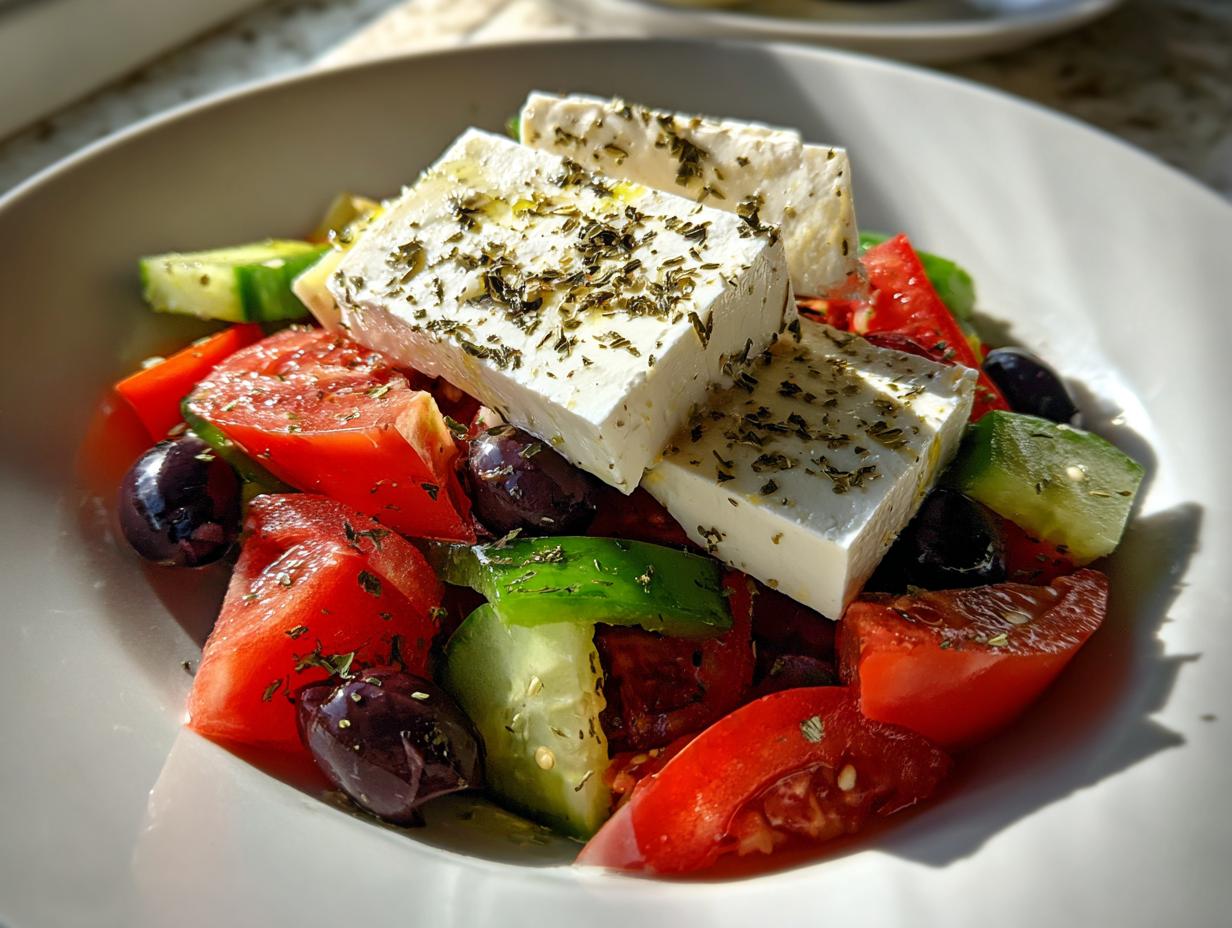
Oh, I totally get it. Some days you want that big, comforting dinner, but other days, you just need something bright, fresh, and honestly, something that doesn’t involve heating up the kitchen! If you’re anything like me, you crave the flavors of the Mediterranean diet but feel like you don’t have the time to make more than a ten-minute meal. Well, stop right there. I have found the absolute perfect solution for those hectic afternoons: the Authentic Greek Salad, or as they call it back home, Horiatiki.
This isn’t some heavy, lettuce-laden bowl. This is pure, crunchy, vibrant vegetable goodness, and it comes together so fast you’ll be shocked. Felix and I are so committed to making sure you eat wonderfully every single day, even when time is sprinting away from you. We believe great food shouldn’t be a chore, and this simple, successful recipe proves it!
- Why This Authentic Greek Salad Recipe Works for Busy Cooks
- Ingredients for Your Perfect Greek Salad
- How to Prepare the Best Greek Salad Dressing
- Step-by-Step Instructions for Your Greek Salad Recipe
- Tips for Success with Your Greek Salad
- Making Variations of the Greek Salad
- Storage & Reheating Instructions for Leftover Greek Salad
- Frequently Asked Questions About This Greek Salad Recipe
- Sharing Your Simple Crowd Pleaser Salad Experience
Why This Authentic Greek Salad Recipe Works for Busy Cooks
Look, I’ve tried every gimmick out there for quick dinners, but sometimes the best solution is just perfectly fresh ingredients that require zero cooking. This salad? It’s my go-to when I want something truly satisfying but have zero patience. It’s all about focusing on quality over quantity.
Ready in Under 15 Minutes
You read that right. Zero cooking time means you save so much energy. Seriously, once you get the rhythm down for slicing the tomatoes and cucumbers, slicing the onion is almost meditative! Since there’s no lettuce to wash and endlessly dry, you skip the most annoying part of making any salad. This truly is a quick 15-minute salad miracle.
The Secret to an Authentic Greek Salad (Horiatiki)
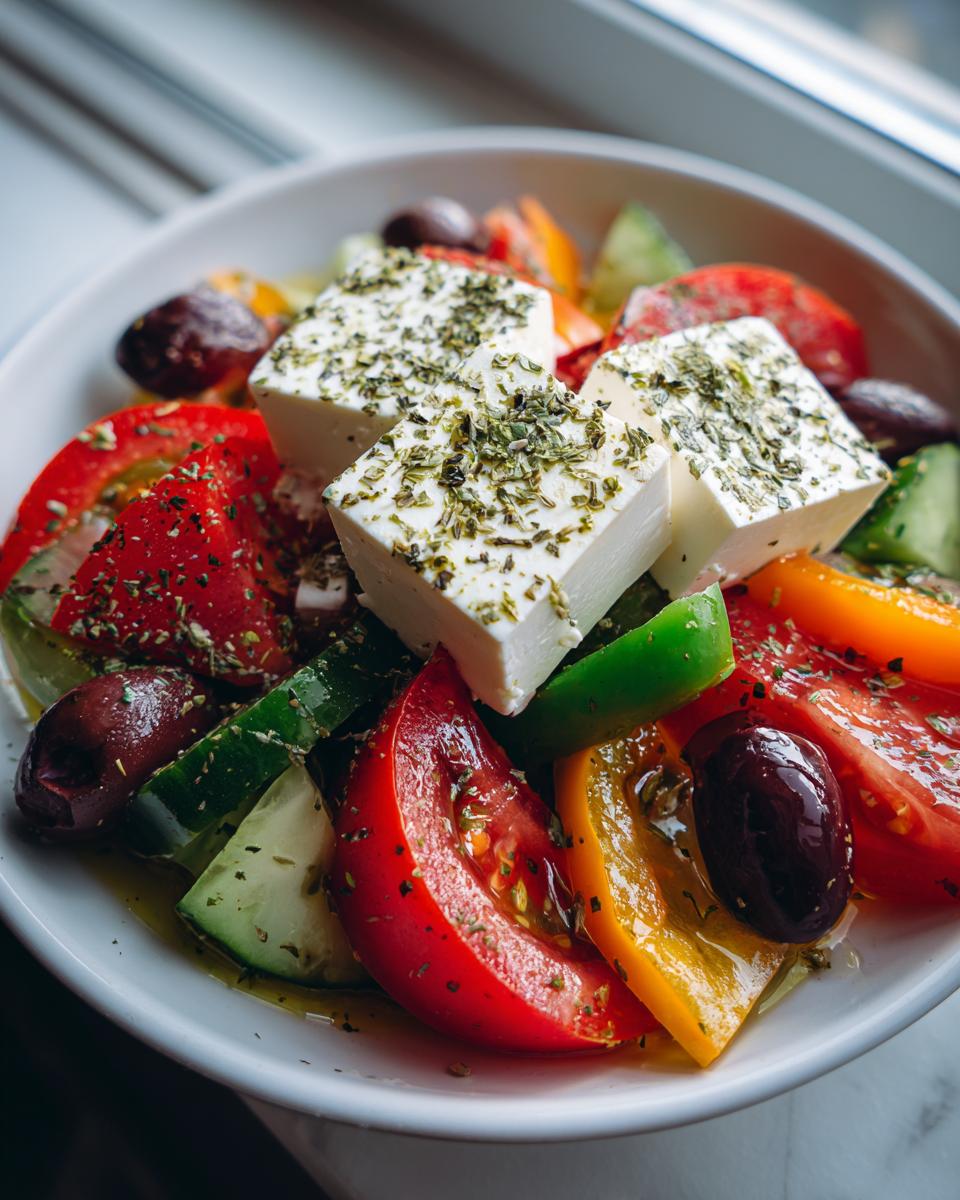
If you want the real deal—Horiatiki—you have to leave the lettuce behind. That’s the biggest difference! We want chunky, beautiful vegetables seasoned perfectly. Trust me, keeping that block of good quality feta cheese on top, instead of crumbling it in, makes a huge textural difference. It keeps the creamy, salty chunks intact for that amazing bite.
Ingredients for Your Perfect Greek Salad
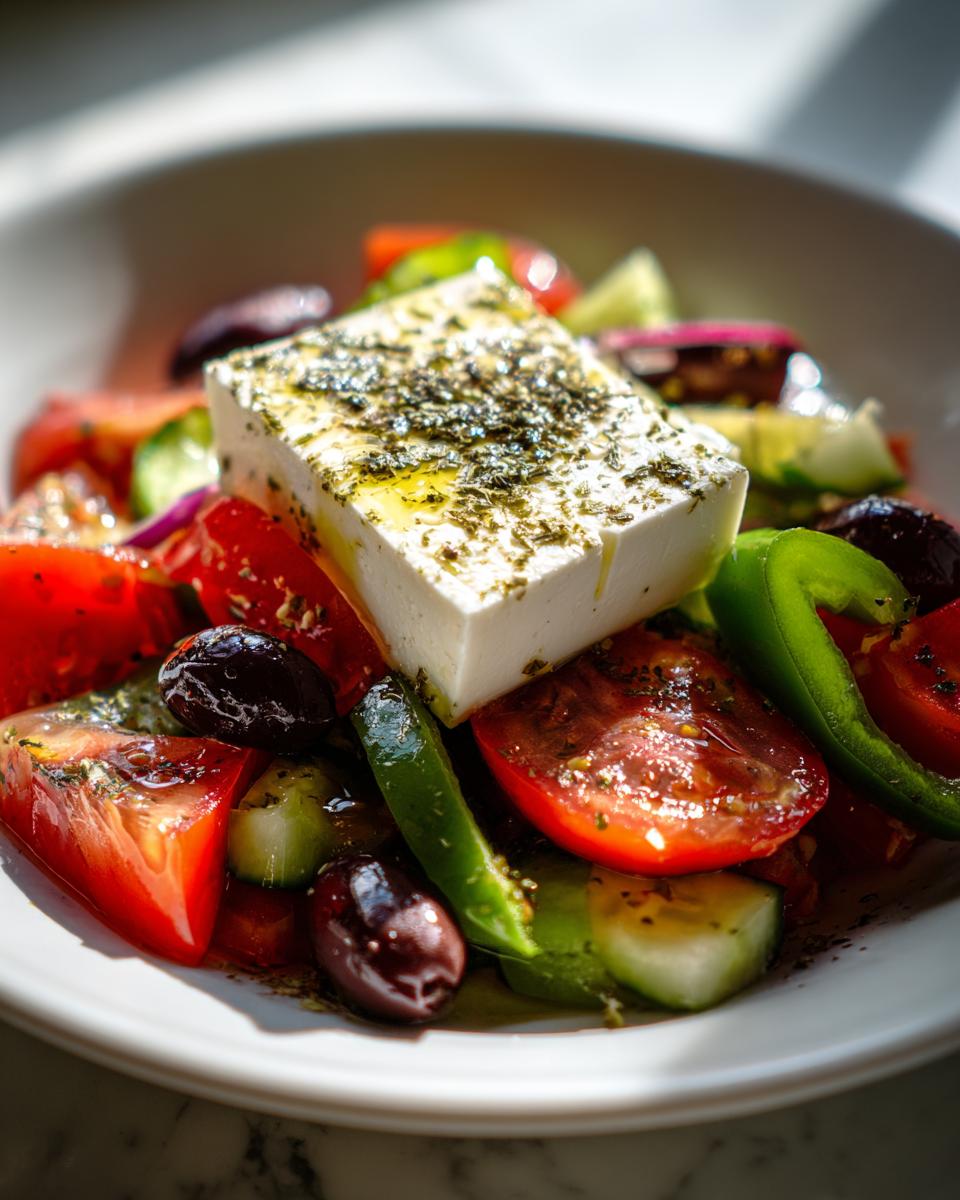
This is where the magic of simplicity really shines, because honestly, we’re using basic stuff! But the quality of what you pick up at the store makes all the difference, especially here. I’m listing everything you need below, but pay close attention to how I specify cutting things—it really impacts the final texture, promise!
You need two big, ripe tomatoes cut into wedges—none of those sad little cherry tomatoes for this recipe. Make sure your cucumber is thick, too; we want crunch! And please, please, grab a block of good quality feta cheese, the kind that looks soft and maybe comes sitting in a little bit of brine if you can find it. Pre-crumbled feta just melts weird when it meets the dressing, and we don’t want that.
Best Greek Salad Dressing Ingredients
The dressing separates everything beautifully. You need a vibrant red wine vinegar—that’s the backbone of the tang—and a good teaspoon of Dijon mustard to help everything come together nicely. But the star? It has to be the olive oil. Don’t skimp here! You need that gorgeous, fruity **Extra Virgin Olive Oil**. That rich oil is what carries all the Greek flavors across your palate.
Don’t forget the dried oregano for the very end! It’s not optional; it’s what makes it taste like Greece.
How to Prepare the Best Greek Salad Dressing
This **Homemade Vinaigrette** is truly the glue that holds this entire salad together. It’s so simple, you’ll never buy bottled dressing again, I promise! We’re going for bright, punchy flavor without too much heaviness.
Grab a small bowl—you don’t even need a jar for this quick batch! Whisk together your olive oil first until it’s looking rich. Then slowly trickle in the red wine vinegar while you keep whisking. You want it to emulsify just a bit so it clings nicely to the chopped vegetables.
The Dijon mustard might seem funny in a Greek dressing, but trust me, it helps keep the oil and acid from separating instantly. Add it in there along with a generous grind of fresh black pepper and a pinch of salt. If you want an extra pop—and I often do—I sneak in about half a teaspoon of fresh lemon juice, too. It just wakes everything up! Whisk hard for about thirty seconds until it looks slightly creamy, and then you’re good to go!
Step-by-Step Instructions for Your Greek Salad Recipe
Okay, everything is chopped, the dressing is mixed, and now we build this beauty! Remember how motivated you felt when you realized this entire dish takes about fifteen minutes total? Keep that energy going, because the assembly here is super fast, but it matters how you layer it if you want that perfect traditional texture.
We move fast here because we want those vegetables crisp. If you start planning your side dishes first, you’ll get your timing wrong! Get your tomatoes, cucumbers, peppers, onions, and those gorgeous Kalamata olives situated nicely in that big bowl you planned on using.
Assembling the Crisp Cucumber Tomato Salad Base
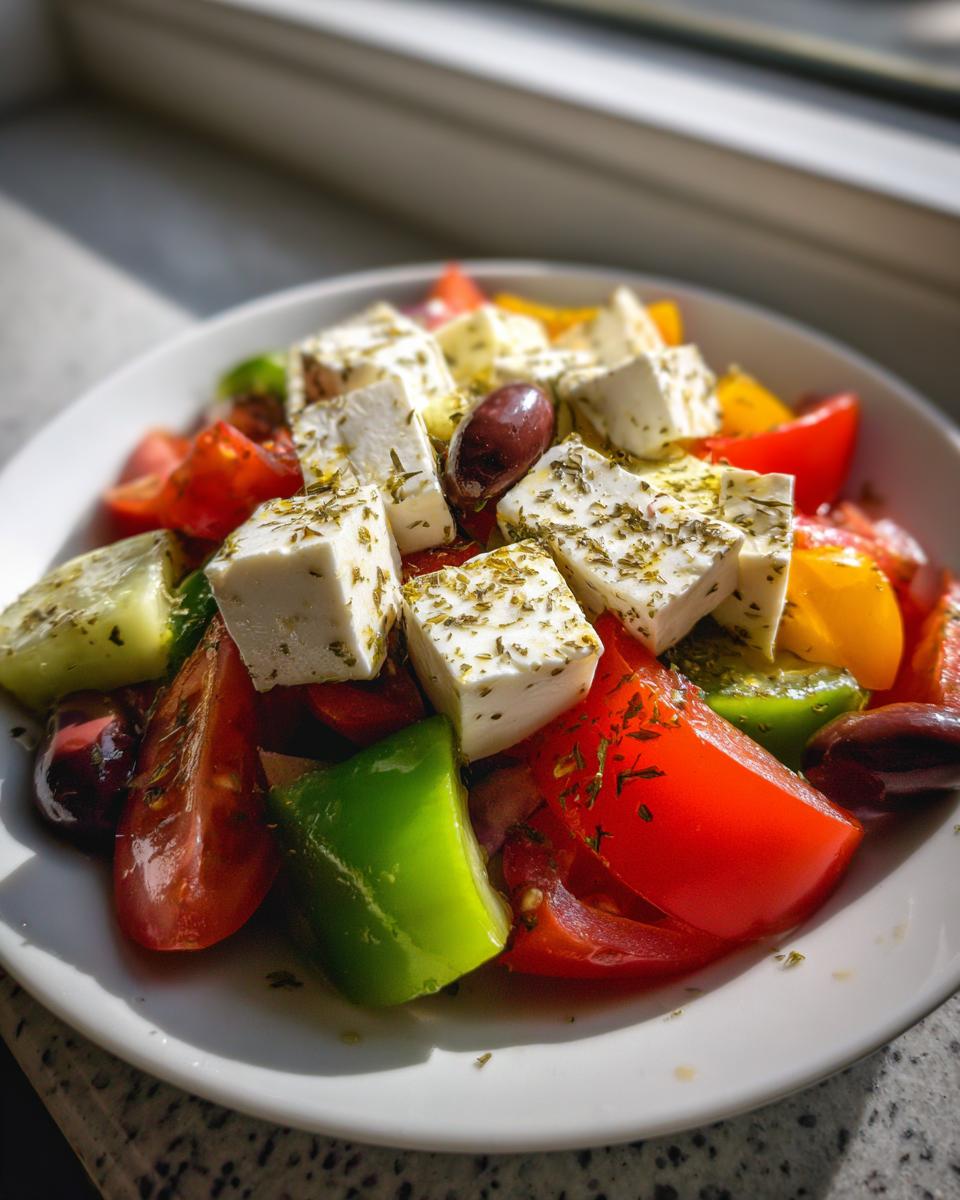
This is the step where we get all the vegetables acquainted with the dressing, but we hold the star ingredient—the feta—back for just a moment. Take about three-quarters of that bright dressing we just made and drizzle it over the veggies and olives. Now, gently toss! I mean really gently! You want the fresh flavors to coat everything lightly, but you don’t want mushy tomatoes. The idea is to coat, not drown them. If you over-toss, you release too much water, and no one wants a watery salad, right?
This initial toss gets all the crunchy bits seasoned just right before we move on to the glorious salty cheese. Knowing how much dressing to use here is key to keeping that wonderful crunch. If it looks lightly coated, you’ve done it perfectly!
Finishing Touches for a Vibrant Salad Bowls
Now for the best part! Take those big, beautiful cubes of feta cheese and arrange them right on top of the dressed vegetables. Do not toss them in! I emphasize this over and over because authentic Horiatiki keeps the feta intact. We want lovely, salty islands floating on top.
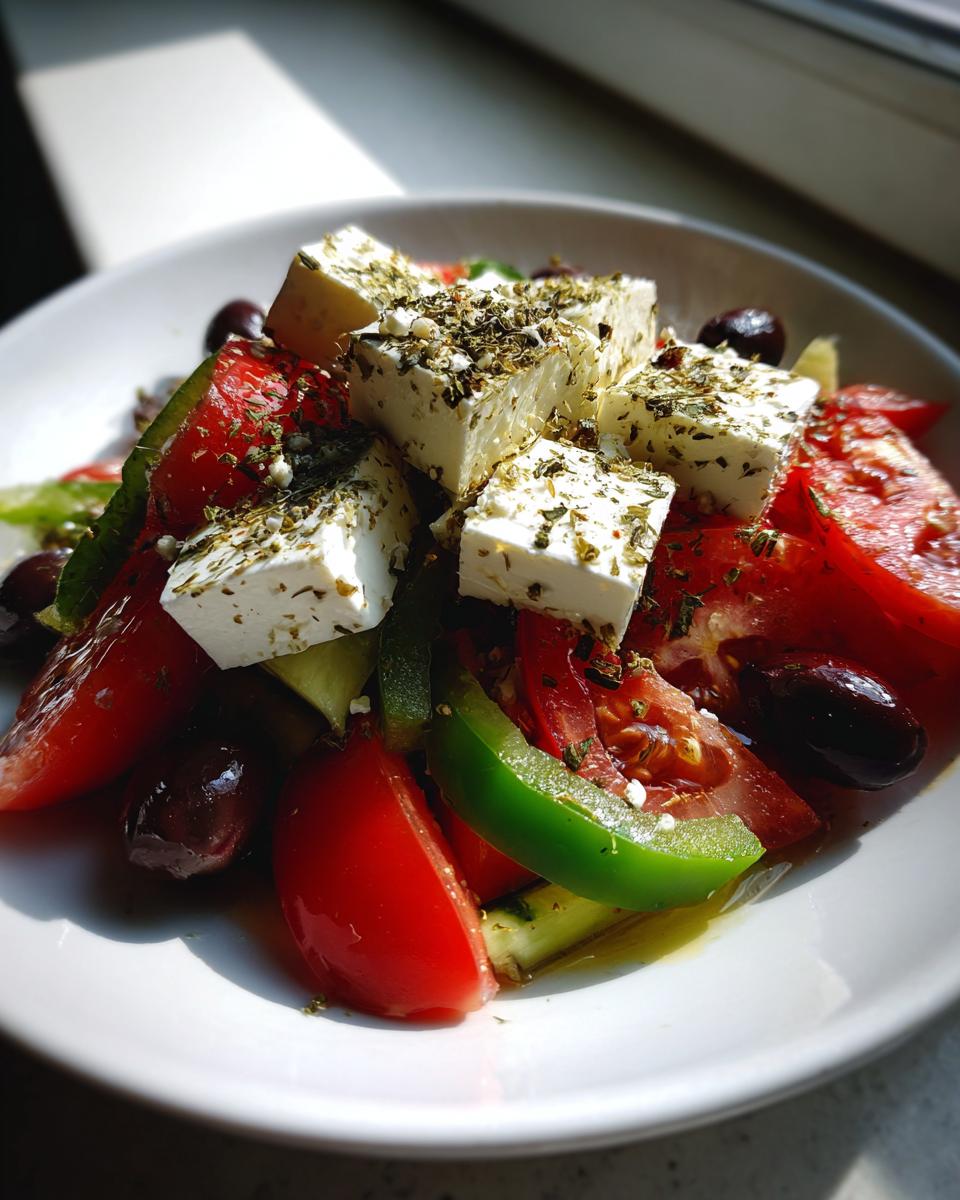
Take that remaining dressing—remember we saved a little?—and drizzle it right over the feta cubes. That’s flavor straight to the star! Finally, grab that dried oregano and sprinkle it generously all over the whole dish. It looks so attractive and smells incredible. Seriously, this dish begs to be served immediately. If you’re thinking about storing leftovers, well, you should check out my tips on that later, because honestly, this salad hates sitting around!
Tips for Success with Your Greek Salad
Look, this recipe is dead simple, but a few tiny details are what separate a *good* Greek salad from the one that makes people ask for the recipe immediately. It’s all about respecting the ingredients, which is Felix’s main philosophy! Since there’s no cooking involved, the quality of what you start with has to be top-notch.
First off, when dealing with the feta, try to find that block wrapped in brine, please. It seems like an extra step, but pre-crumbled feta is often drier and has anti-caking agents that change the texture completely. The brine keeps it soft and creamy for that perfect contrast against the crisp veggies. You can see great examples of this focus over at Downshiftology, too!
My biggest warning? Assembly timing! This salad gets soggy if you let it sit around waiting for latecomers. The olive oil dressing draws water out of the tomatoes fast. Aim to dress the vegetables and put everything together right before you plan on eating. Trust me, those five minutes of waiting time aren’t worth having a watery dish!
Making Variations of the Greek Salad
Now, I love the authenticity of the Horiatiki style—no lettuce, just pure vegetables—but let’s be real, sometimes you need a salad to actually fill you up as a full meal, right? Because this base is so flavorful and sturdy, it stands up beautifully to added protein, turning it into a fantastic contender for **Light Lunch Ideas**.
The key is adding things that don’t compromise the integrity of the dressing or the vegetables. We’re not adding creamy things or anything that needs to be cooked and cooled significantly because of how fast this dish comes together. But you absolutely can bulk it up!
If you need something hearty, I usually reach for beans or pre-cooked meat. A can of chickpeas, rinsed well! That’s a perfect addition for satisfying vegetarian protein. They pick up the Greek dressing flavor like a dream. Or, if you managed to grill some chicken breast the night before, slice it up thinly and toss it right in.
I saw someone making an amazing version with added grilled chicken breast, and honestly, it looked incredible as a satisfying summer dinner. If you want to check out how those protein additions work out, you can see a great example of that approach. Just remember, the moment you add something heavy, you might want to double the dressing recipe slightly, because the extra ingredients will soak up all that tangy olive oil goodness!
Storage & Reheating Instructions for Leftover Greek Salad
Okay, I’m going to be totally honest with you: this salad is designed to be eaten right away. It’s a **fresh vegetable salad**, and those juicy tomatoes just don’t play nice if you try to save them for tomorrow. If you have leftovers, don’t throw them out, but you have to store them smart!
The non-negotiable rule is separation. Keep the vegetables (tomatoes, cucumbers, onions) in one airtight container, and keep any leftover feta and olives in another. Do *not* store them with the dressing on them! The dressing goes straight into a tiny jar. If you keep things apart, you might salvage your vegetables for lunch the next day. You can dress the portion you plan to eat right before you dig in!
Frequently Asked Questions About This Greek Salad Recipe
I get so many great questions about this dish because people love that quick, fresh Mediterranean feel! I’ve gathered the most common ones right here to make sure your salad game is always on point. If you have more questions after trying this, just shoot me a message using my contact page!
Can I use pre-crumbled feta in my Greek Salad?
Technically? Yes, you can, but I really, really don’t recommend it for the best results. When you buy that block of **Feta Cheese Salad** sitting in the brine, it’s soaking up moisture and salt, keeping it incredibly creamy. Pre-crumbled feta is usually harder and is often dusted with starch so it doesn’t stick together in the bag. That starch can make your dressing look a little cloudy. If you’re in a crazy rush, use it, but for an *amazing* salad, stick to the block!
What makes this an Authentic Greek Salad (Horiatiki)?
This is my favorite part of teaching people about this recipe! The term for the real, traditional version is **Horiatiki Salad**, which means ‘village salad.’ The defining feature—and I cannot stress this enough—is the **No Lettuce Greek Salad** rule. Authentic versions are just chunky tomatoes, cucumbers, peppers, onions, olives, and that big block of feta drizzled with olive oil and sprinkled heavy with dried oregano. That’s it! No filler lettuce needed!
What are the best Side Dishes for Dinner when serving this salad?
Since this is a lovely, light addition, it pairs wonderfully with almost any simple protein. If you’re serving this as **Side Dishes for Dinner**, I usually go for something grilled! Think simply seasoned chicken breast or maybe some grilled shrimp. If you want carb action, you can’t beat serving this alongside warm pita bread for dipping into the residual dressing and tomato juice—that’s the best part! Or, if you’re feeling a little more effort, some roasted lemon potatoes are absolutely divine with these cool, fresh vegetables.
Sharing Your Simple Crowd Pleaser Salad Experience
I truly hope you loved making this Authentic Greek Salad! Honestly, when something is this fast and this fresh, it just sings. It’s proof that you don’t need weird gadgets or hours of time to make something truly worthy of a beautiful dinner table setting.
I’d absolutely love to hear how this **Easy Mediterranean Salad** turned out for you! Did the **Best Greek Salad Dressing** become your new signature vinaigrette? Did you manage to keep the feta cubes intact like I begged you to?
Please leave a star rating down below—it really helps other busy cooks know that this Horiatiki recipe is something they can rely on for a quick, tasty win. And if you snapped a picture of your vibrant salad bowls, share it on social media and tag me! Seeing your beautiful, fresh creations is honestly the best part of my day. Happy cooking, everyone!
PrintAuthentic Greek Salad (Horiatiki Style)
Make a fresh, traditional Greek salad without lettuce. This recipe focuses on quality vegetables, feta, olives, and a simple, bright homemade dressing. It is ready in under 15 minutes.
- Prep Time: 15 min
- Cook Time: 0 min
- Total Time: 15 min
- Yield: 4 servings 1x
- Category: Side Dish
- Method: No Cook
- Cuisine: Greek
- Diet: Vegetarian
Ingredients
- 2 large ripe tomatoes, cut into wedges
- 1 large cucumber, peeled, seeded, and cut into thick half-moons
- 1/2 red onion, thinly sliced
- 1 green bell pepper, seeded and sliced
- 1 cup Kalamata olives, pitted or unpitted
- 8 ounces block of good quality feta cheese, cut into large cubes
- 1 teaspoon dried oregano (for topping)
- 1/4 cup extra virgin olive oil (for dressing)
- 2 tablespoons red wine vinegar (for dressing)
- 1 teaspoon Dijon mustard (for dressing)
- Salt and freshly ground black pepper to taste
Instructions
- Prepare the vegetables: Cut the tomatoes, cucumber, red onion, and green pepper as directed. Place all prepared vegetables and the olives into a large mixing bowl.
- Make the dressing: In a small bowl, whisk together the olive oil, red wine vinegar, and Dijon mustard. Season with salt and pepper. Whisk until the dressing emulsifies slightly.
- Dress the salad: Pour about three-quarters of the dressing over the vegetables. Gently toss the vegetables to coat them lightly.
- Add the feta: Arrange the feta cheese cubes over the top of the dressed vegetables. Do not toss the feta, as you want the large pieces to remain intact.
- Finish and serve: Drizzle the remaining dressing over the feta. Sprinkle the entire salad generously with dried oregano. Serve immediately.
Notes
- For the most authentic flavor, use a block of feta stored in brine, rather than pre-crumbled feta.
- If you prefer a tangier dressing, add 1/2 teaspoon of fresh lemon juice to the vinaigrette mixture.
- This salad is best assembled right before serving to keep the vegetables crisp.
Nutrition
- Serving Size: 1 serving
- Calories: 350
- Sugar: 6
- Sodium: 850
- Fat: 32
- Saturated Fat: 10
- Unsaturated Fat: 22
- Trans Fat: 0
- Carbohydrates: 14
- Fiber: 4
- Protein: 12
- Cholesterol: 45