

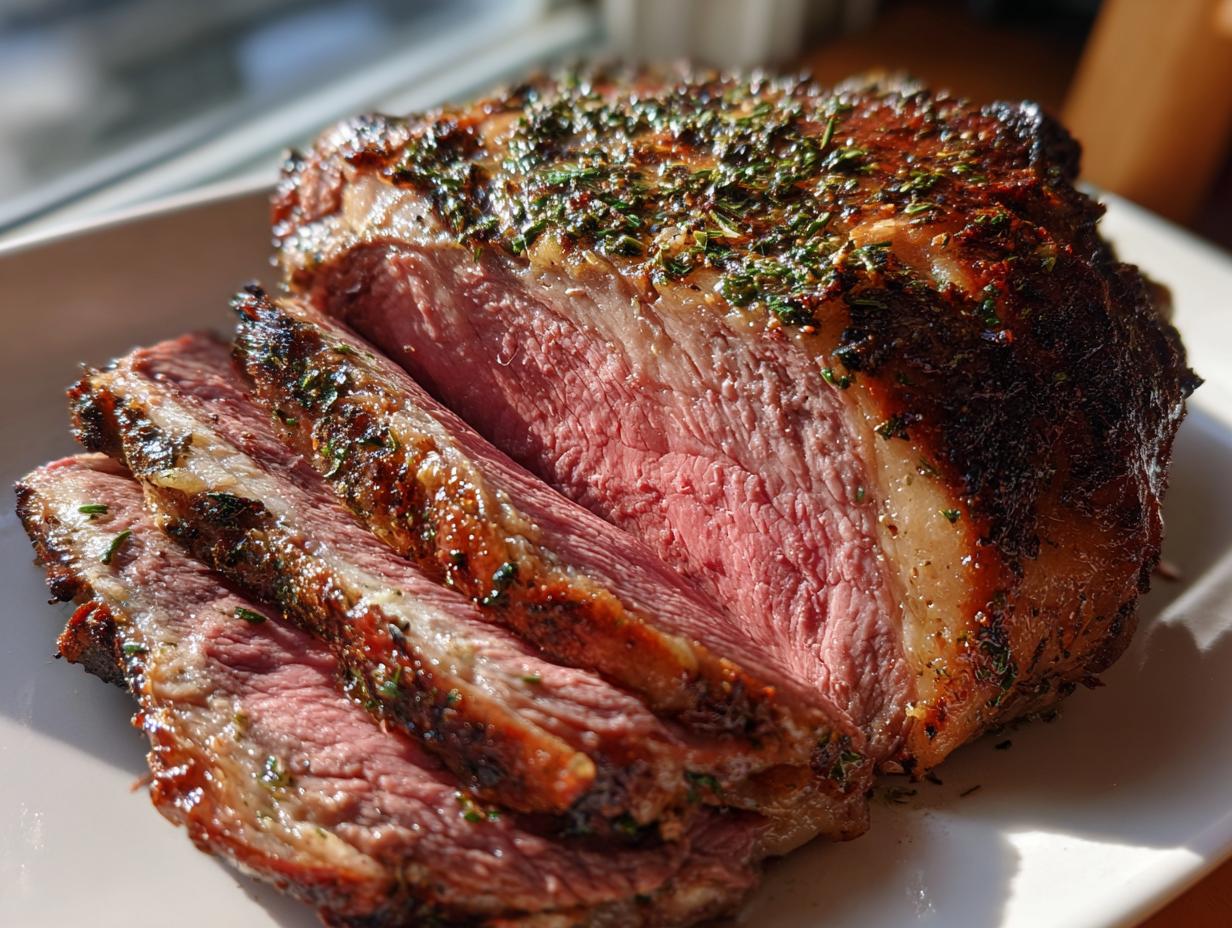
Are you staring down at that enormous, expensive piece of beef and instantly starting to sweat? I totally get it! Cooking a big holiday roast can feel like the highest-stakes moment in the kitchen. But trust me, those days of worrying about dry, grayish meat are over. I’ve taken Felix’s mission—making elegant food achievable for busy folks—and applied it to the ultimate centerpiece. This specific prime rib recipe uses the famous 500-degree sear-and-roast method, and I swear, it’s foolproof. It locks in all the delicious juices and ensures you get that perfect, blushing medium-rare center every single time. Seriously, get ready to impress everyone without breaking a sweat.
- Why This Garlic Herb Prime Rib Recipe Guarantees Success
- Essential Ingredients for the Best Prime Rib Recipe
- Step-by-Step Instructions for Oven Roasted Prime Rib
- Tips for Making This Prime Rib Recipe Your Holiday Centerpiece
- Variations on the Classic Prime Rib Recipe
- Serving Suggestions for Your Perfectly Cooked Roast
- Storage and Reheating Instructions for Leftover Prime Rib Recipe
- Frequently Asked Questions About This Prime Rib Recipe
- Share Your Perfect Prime Rib Recipe Experience
- Estimated Nutritional Information for This Prime Rib Recipe
Why This Garlic Herb Prime Rib Recipe Guarantees Success
I know that sinking feeling when you realize you might overcook a roast that costs this much! Seriously, don’t even worry about it. That’s why this specific method works so well. That initial blast of high heat—that 500-degree sear—is scientifically brilliant. It cooks the fatty outer layer quickly, creating a gorgeous crust, and actually helps seal in the internal moisture before we move to the lower temperature.
This recipe turns out the most incredibly juicy roast beef you’ve ever made. It’s designed exactly to help you impress guests effortlessly. You get all that gourmet flavor and texture without the usual kitchen acrobatics. Since we use a thermometer (more on that later!), you stop playing guessing games with your expensive meat.
- Guaranteed medium-rare center
- Rich, savory crust from the herb butter
- Clear, non-negotiable temperature checks
- Perfect for making holiday meals stress-free
If you love easy cooking techniques that still deliver incredible flavor, you absolutely have to check out my directions for melt-in-your-mouth pot roast too—it’s a different cut, but the same philosophy!
The Fool-Proof Temperature Guide for Your Prime Rib Recipe
This is where we take the guesswork out of everything. You absolutely must use an instant-read thermometer for this prime rib recipe; it’s the only way to nail that perfect center. I aim for 125°F when I pull it out of the oven. That will give you the perfect medium rare roast after resting.
If you prefer things slightly more cooked, here are the pull temperatures:
- Rare: Pull at 120°F
- Medium: Pull at 130°F
- Medium-Well: Don’t even think about it! (Just joking, pull at 135°F)
Essential Ingredients for the Best Prime Rib Recipe
Okay, let’s talk about what you actually need. Getting the right stuff is half the battle, especially when you are dealing with a star player like prime rib. You want a beautiful, tied, bone-in roast, about 5 to 7 pounds, that’s your starting point. Don’t be shy when you talk to your butcher; ask them exactly what their best recommendation is for a standing rib roast!
We are making a gorgeous herb crusted roast here, so the butter rub needs to be potent. Remember, the butter has to be softened—not melted, softened!—so it really smothers the beef nicely.
- One 5–7 lb bone-in prime rib roast, tied
- 1/4 cup softened butter (the good stuff!)
- 4 cloves garlic, minced super fine
- 1 tablespoon fresh rosemary, chopped
- 1 tablespoon fresh thyme leaves
- 2 teaspoons coarse sea salt (we need that texture!)
- 1 teaspoon fresh black pepper
- 1 tablespoon Dijon mustard
Ingredient Notes and Substitutions for Your Herb Crusted Roast
If you can’t get rosemary or thyme fresh, dried works in a pinch, but use maybe half the amount, okay? Fresh is really superior here. Also, the Dijon mustard is your secret weapon for getting that crust to stick and adding a little tang, so don’t skip it! We are using bone-in because those bones help insulate the roast and keep it tender, but if you only grab boneless, just know that you’ll need to pull your cooking time down a bit.
Step-by-Step Instructions for Oven Roasted Prime Rib
Now we get to the fun part—making this spectacular oven roasted prime rib! Before we even think about turning the oven on, remember that crucial first step: tempering. You have to take that roast out of the fridge at least two hours before you plan to cook it. Cold meat hitting a hot pan just equals uneven cooking, and we can’t have that on our watch. Preheat that oven to a blazing 500 degrees Fahrenheit while you prep the flavor bomb!
If you want to check out a great guide on general meat prep before you get started, take a peek at this info on handling roasts! It’s really helpful.
Preparing the Garlic Butter Prime Rib Rub
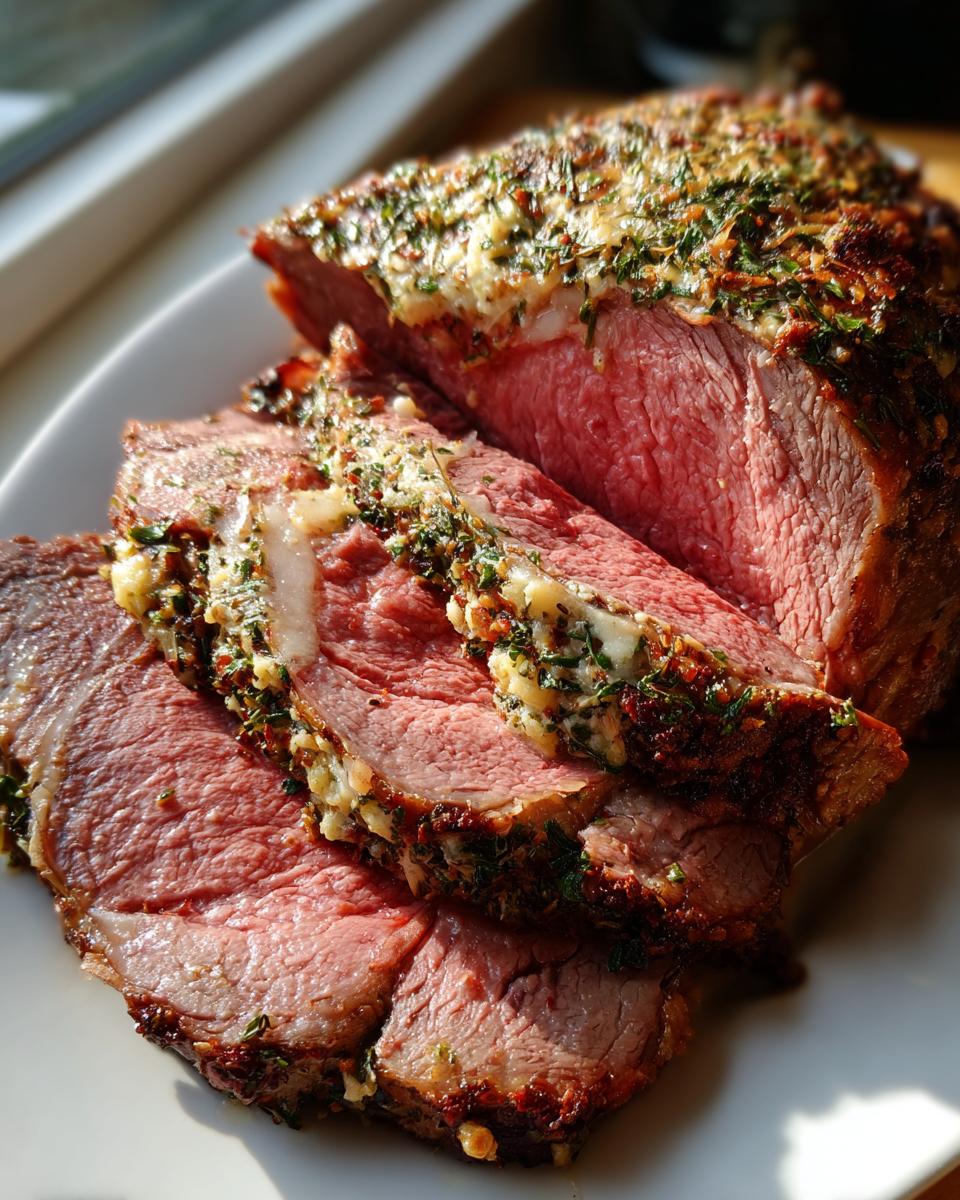
First things first, pat that beautiful roast absolutely dry with paper towels. I mean bone dry! Then, you’re going to smear that thin layer of Dijon mustard all over it—that’s the glue. Now, take your awesome garlic butter prime rib mixture and really press it in firmly everywhere. Don’t be shy; you want a thick, fragrant shell covering the meat before it hits the heat.
The Critical Roasting Times for Your Prime Rib Recipe
This is the secret sauce of this prime rib recipe! Roast it hard at 500°F for exactly 15 minutes. Don’t overthink it, just 15 minutes! After that, you drop the temperature down sharply to 325°F. Now, you cook until your meat thermometer—inserted into the thickest spot, avoiding the bone—hits 125°F for medium-rare. Trust the thermometer, not the clock, but expect around 13 to 15 minutes per pound for that lower temp stage.
The Non-Negotiable Rest Period for a Juicy Roast Beef
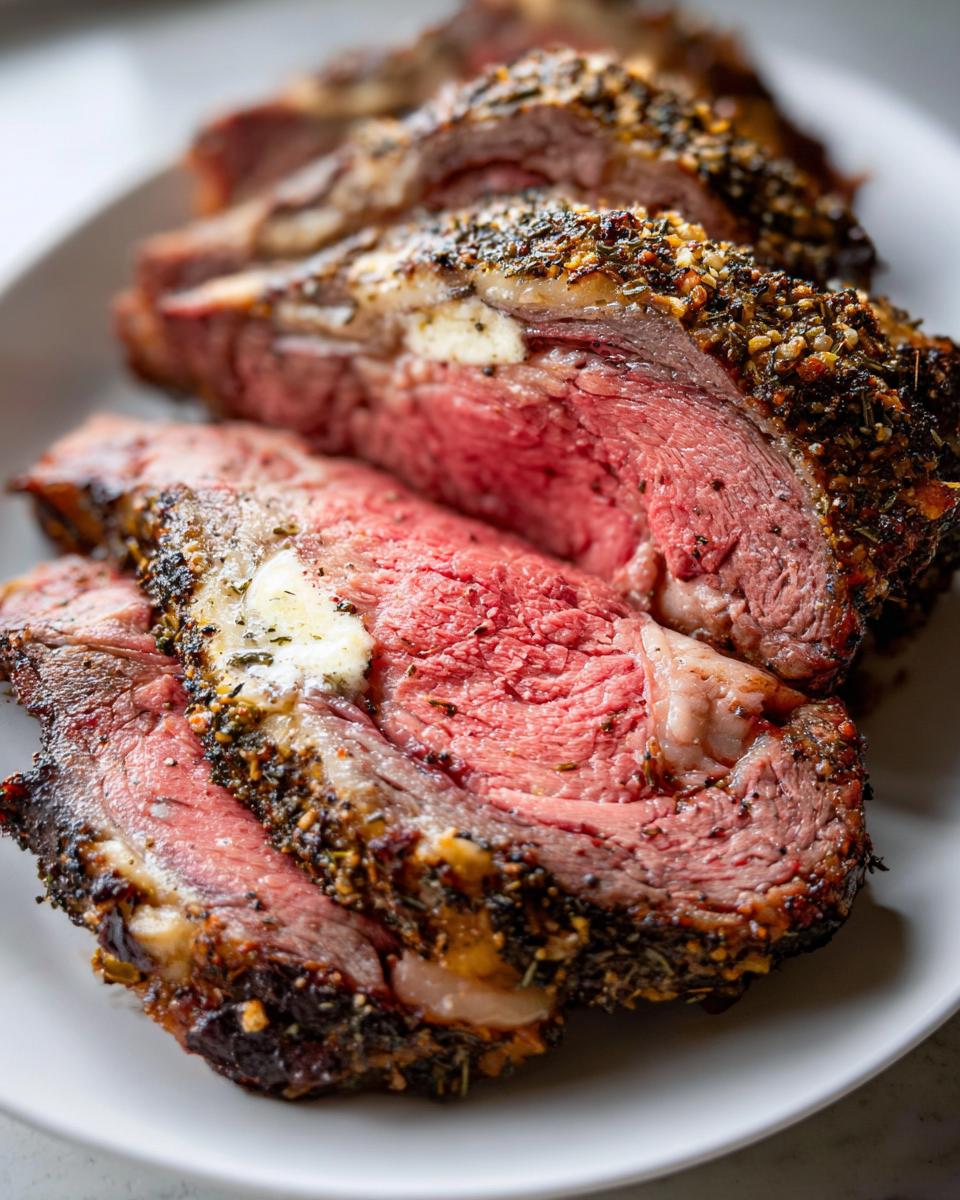
I cannot stress this enough: your roast must rest! After taking it out at 125°F, tent it loosely with foil and leave it alone for a full 20 minutes. Period. This resting time means all those delicious juices, which panicked and rushed to the center during cooking, get to redistribute throughout the meat. When they settle back in, you get that sensational, melt-in-your-mouth juicy roast beef that makes this dish legendary. You’ll see the temp creep up five degrees while it naps!
For more ideas on roasting different cuts simply, check out my guide on making a juicy oven-roasted pork loin!
Tips for Making This Prime Rib Recipe Your Holiday Centerpiece
You’ve got your perfectly cooked roast resting beautifully—what’s next to turn this from a nice dinner into the showstopper everyone talks about? Focus on those drippings! Seriously, never waste the flavor left in that roasting pan. While the beef is resting, pop that pan (if glass or oven-safe) back on a medium burner over the stovetop.
Bring those rich drippings to a simmer. I love throwing in some chopped onion and maybe a splash of beef broth or even some red wine if I have it left over—this gets the flavor deep fast. Then you just whisk in a little flour or cornstarch slurry until it thickens up perfectly. That’s instant au jus right there! This simple step elevates your entire Holiday Roast experience.
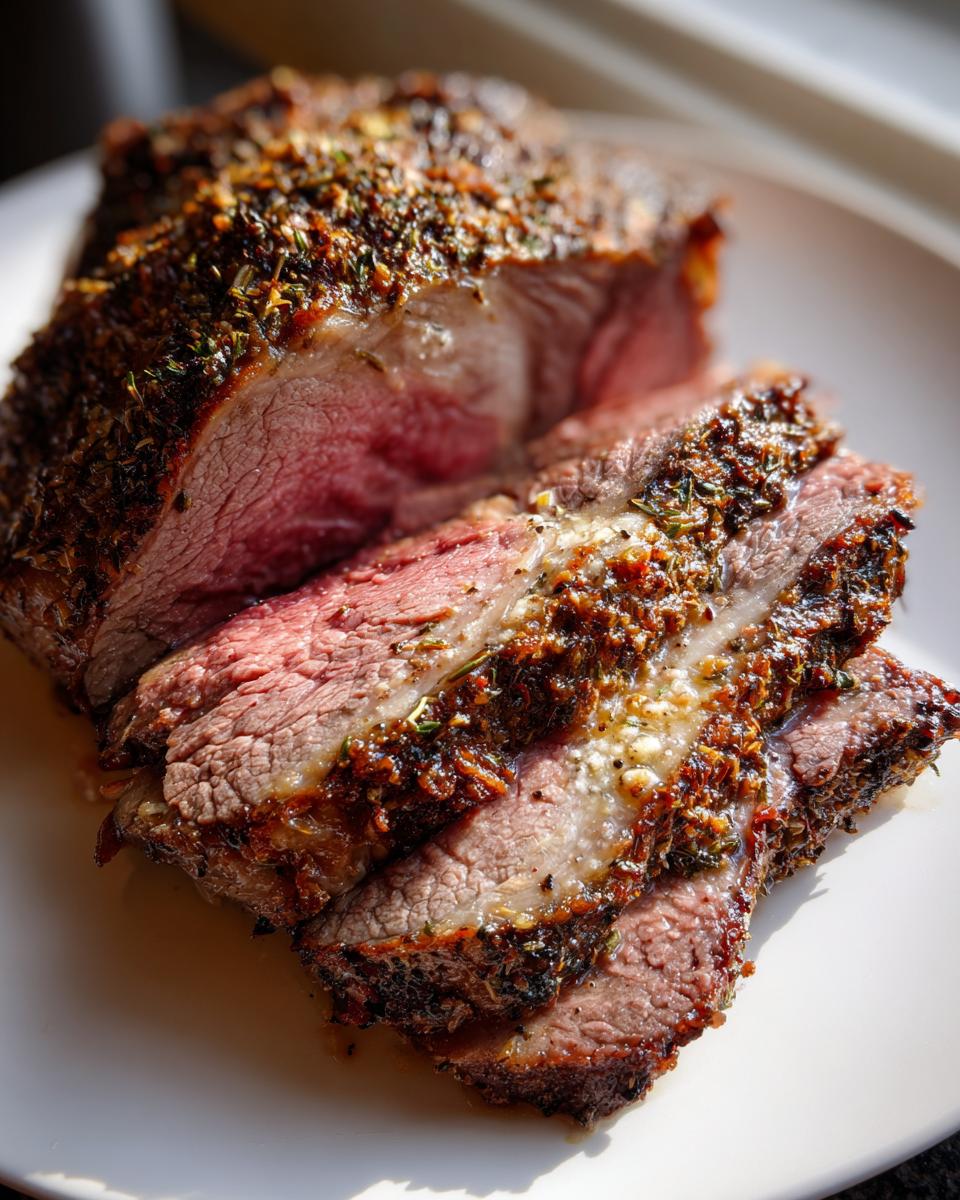
Think of this roast as the ultimate Thanksgiving Centerpiece, even if you’re serving it on Christmas! Making the au jus while the roast rests is how you maximize flavor without adding stress during the main cooking window. For other easy centerpiece ideas, you might want to check out how I do my slow cooker pot roast for less formal gatherings.
Variations on the Classic Prime Rib Recipe
The beauty of this core prime rib recipe is that it’s so sturdy, it handles flavor changes like a champ! We are trying to keep it easy, never complicated, so we aren’t reinventing the wheel here, just swapping out the spices in that butter rub—that’s it!
If garlic and herb isn’t hitting the spot, try making it smoky instead! Mix that softened butter with smoked paprika, a little cayenne for a kick, and maybe some dried oregano instead of the rosemary. Or, if you’re feeling sophisticated, skip the herbs completely and just layer thinly sliced shallots and fresh thyme sprigs over the top of the Dijon before you put the butter on.
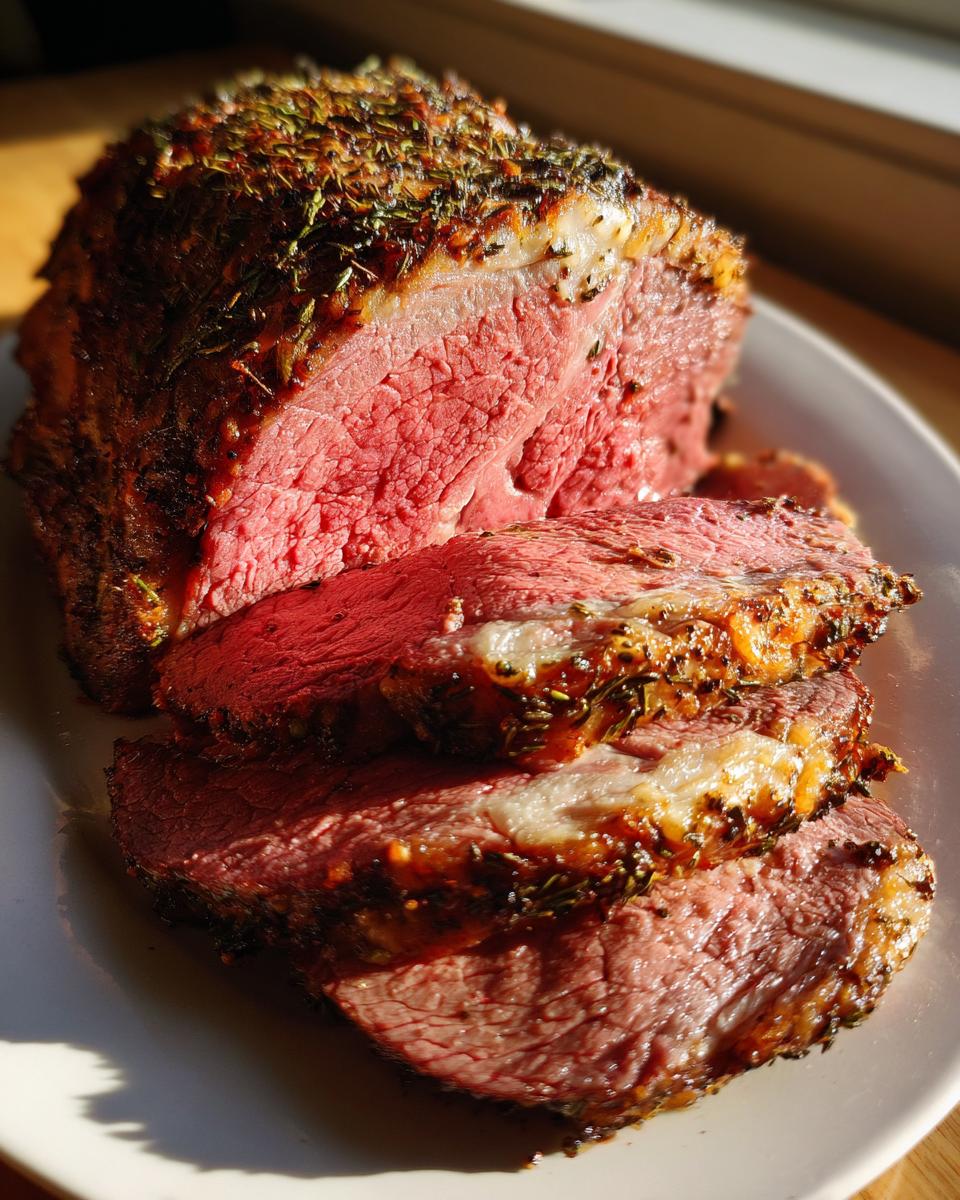
The key is keeping that initial 500-degree blast and the resting time the same. Stick to the Easy Prime Rib Method, and you can change the flavor profile every time you make it!
Serving Suggestions for Your Perfectly Cooked Roast
So, you’ve nailed the roast! It’s resting beautifully, and now you need the supporting actors to step up. A rich, perfectly cooked roast like this deserves sides that soak up all those amazing drippings. You can’t go wrong with classic potatoes—I always make sure my mashed potatoes are extra creamy for dipping, or you could try my cheesy layered potatoes if you have a little extra time.
For the green component, something bright helps cut through the richness. A simple roasted asparagus or even my favorite easy broccoli casserole works wonders. And if you love sweet potatoes, you absolutely must check out my recipe for Southern sweet potato casserole—that crunchy topping is divine alongside sliced beef!
Storage and Reheating Instructions for Leftover Prime Rib Recipe
Oh, if you’re lucky enough to have leftovers from this amazing prime rib recipe, you’ve won the food lottery for the next few days! Keep any unsliced portions tightly wrapped in the fridge; it’ll last you about three or four days easily. The real trick comes when you reheat the thin slices.
Do NOT blast those last pieces in the microwave naked! That’s a recipe for tough, dry beef. Instead, put your slices in a shallow baking dish and drizzle a few tablespoons of your leftover au jus or some beef broth over them. Cover that dish tightly with foil and warm it gently in a 300-degree oven until just heated through. It keeps them moist and tender—just like the first night!
Frequently Asked Questions About This Prime Rib Recipe
When you’re tackling a big roast, naturally you’re going to have questions bubbling up. I get it! People always ask me about the size of the cut or if they can skip the bone. We want to make sure you feel totally confident when you try this prime rib recipe for yourself, especially when it comes to the tricky parts like temperature!
If you’re planning out the whole meal, remember how amazing this roast is with a velvety side, like my easy creamy Cajun potato soup, if you want something a little different than standard mashed potatoes!
Can I use a boneless prime rib roast instead of bone-in?
Oh yes, you certainly can use a boneless roast! Just know that the bone in the standing cut acts like a little natural shield, insulating the meat near the middle when we roast. If you go boneless, your cooking time at 325 degrees will likely be a little shorter, so watch that thermometer even closer than usual!
How do I calculate the roast beef cooking times?
This is where people panic, but we already covered the secret: the thermometer wins every time! However, for the 325°F stage, you can generally expect about 13 to 15 minutes per pound for that perfect medium-rare pull temperature. I always weigh my roast first and start timing from there, but seriously, when the meat says it’s done, it’s done. Don’t let the clock dictate your results when you are nailing those roast beef cooking times!
Share Your Perfect Prime Rib Recipe Experience
We made it! Now that you’ve got that gorgeous, juicy roast beef resting on your counter, I truly want to know how it went. Did you nail that medium-rare center? Please hit those stars below and leave me a little note in the comments telling me what amazing side dishes you paired with this glorious main event. Happy cooking, friends!
Estimated Nutritional Information for This Prime Rib Recipe
Because we want you to feel totally good about serving up this showstopper, I pulled together the nutritional estimates for this prime rib recipe. Now, I have to give you the standard happy disclaimer: since beef cuts vary wildly in marbling and fat content, these numbers are just an educated guess based on a 6-ounce serving of the cooked roast!
We’re focusing on that luxurious protein, not the carbs, right? Here’s the breakdown based on the standard recipe yield:
- Serving Size: 6 oz cooked
- Calories: About 450 (Wowza, worth every one!)
- Protein: 40g (Hello, muscle building!)
- Carbohydrates: 0g (Naturally low-carb!)
- Total Fat: 30g
- Saturated Fat: 14g
Remember, this is an estimate for the beef itself, not including any crust remnants or the au jus you might be spooning all over it, which I totally recommend you do! Enjoy this luxury meal knowing exactly what you’re serving up.
PrintFool-Proof Oven Roasted Prime Rib with Garlic Herb Butter
Follow this simple method to cook a juicy, tender prime rib roast with a flavorful herb crust. This recipe guarantees a perfectly cooked medium-rare result for your special occasion dinner.
- Prep Time: 20 min
- Cook Time: 2.5 hours
- Total Time: 2 hours 50 min
- Yield: 6-8 servings 1x
- Category: Holiday Roast
- Method: Oven Roasting
- Cuisine: American
- Diet: Low Calorie
Ingredients
- 1 (5-7 lb) bone-in prime rib roast, tied
- 1/4 cup softened butter
- 4 cloves garlic, minced
- 1 tablespoon fresh rosemary, chopped
- 1 tablespoon fresh thyme leaves
- 2 teaspoons coarse sea salt
- 1 teaspoon black pepper
- 1 tablespoon Dijon mustard
Instructions
- Remove the prime rib roast from the refrigerator 2 hours before cooking to allow it to come to room temperature. Preheat your oven to 500 degrees Fahrenheit.
- In a small bowl, mix the softened butter, minced garlic, rosemary, thyme, salt, and pepper to create the herb butter rub.
- Pat the roast dry with paper towels. Rub the Dijon mustard evenly over the entire surface of the roast.
- Press the garlic herb butter mixture firmly onto the roast, covering all sides.
- Place the roast, fat-side up, in a roasting pan fitted with a rack.
- Roast at 500 degrees Fahrenheit for exactly 15 minutes.
- Reduce the oven temperature to 325 degrees Fahrenheit. Continue roasting until the internal temperature reaches 125 degrees Fahrenheit for medium-rare (about 13-15 minutes per pound total cooking time). Use a meat thermometer inserted into the thickest part of the roast, avoiding the bone.
- Remove the roast from the oven when it hits 125 degrees Fahrenheit. Tent it loosely with foil.
- Let the roast rest for 20 minutes before slicing against the grain. The internal temperature will rise to about 130-135 degrees Fahrenheit (medium-rare).
- Slice and serve immediately.
Notes
- For a bone-in roast, ask your butcher to ‘French’ the bones for easier carving later.
- If you prefer medium, pull the roast when the thermometer reads 130 degrees Fahrenheit, resting to 135-140 degrees Fahrenheit.
- Use the drippings in the roasting pan to make a simple pan gravy or au jus.
Nutrition
- Serving Size: 6 oz cooked
- Calories: 450
- Sugar: 0
- Sodium: 350
- Fat: 30
- Saturated Fat: 14
- Unsaturated Fat: 16
- Trans Fat: 0
- Carbohydrates: 0
- Fiber: 0
- Protein: 40
- Cholesterol: 140