30-Minute Better-Than-Takeout Shrimp Fried Rice: Easy Skillet Dinner
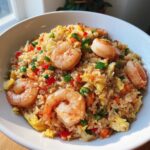
Make restaurant-quality shrimp fried rice at home in just 30 minutes using one skillet. This easy recipe uses leftover rice, tender shrimp, and a savory sauce for a satisfying weeknight dinner.
- Prep Time: 10 min
- Cook Time: 20 min
- Total Time: 30 min
- Yield: 4 servings 1x
- Category: Dinner
- Method: Stir Fry
- Cuisine: Asian
- Diet: Low Fat
Ingredients
Scale
- 1 tablespoon neutral oil, divided
- 1 pound raw shrimp, peeled and deveined
- 2 cloves garlic, minced
- 1 cup frozen mixed vegetables (peas, carrots, corn)
- 3 cups cold, cooked leftover rice
- 2 large eggs, lightly beaten
- 3 tablespoons soy sauce
- 1 tablespoon oyster sauce
- 1 teaspoon toasted sesame oil
- 2 green onions, sliced (for garnish)
Instructions
- Heat half of the neutral oil in a large skillet or wok over medium-high heat. Add the shrimp and cook for 2 to 3 minutes until pink and cooked through. Remove the shrimp from the skillet and set aside.
- Add the remaining oil to the skillet. Add the minced garlic and cook for 30 seconds until fragrant. Add the frozen vegetables and cook for 2 minutes, stirring occasionally.
- Push the vegetables to one side of the skillet. Pour the beaten eggs onto the empty side. Scramble the eggs until just set, then break them up and mix them with the vegetables.
- Add the cold leftover rice to the skillet. Break up any clumps with your spatula. Stir fry for 3 to 4 minutes until the rice is heated through and slightly toasted.
- Return the cooked shrimp to the skillet. Pour the soy sauce, oyster sauce, and sesame oil over the rice mixture. Toss everything together quickly until the rice is evenly coated and heated through, about 1 minute.
- Remove from heat. Garnish with sliced green onions before serving immediately.
Notes
- Use day-old, cold rice for the best texture; fresh rice tends to become mushy when fried.
- If you do not have oyster sauce, you can substitute it with an equal amount of hoisin sauce or an extra teaspoon of soy sauce mixed with a pinch of sugar.
- For a deeper savory flavor, use low-sodium soy sauce to control the final saltiness.
Nutrition
- Serving Size: 1 serving
- Calories: 410
- Sugar: 4
- Sodium: 850
- Fat: 10
- Saturated Fat: 2
- Unsaturated Fat: 8
- Trans Fat: 0
- Carbohydrates: 45
- Fiber: 2
- Protein: 35
- Cholesterol: 220